The President's Logbook: The Future of Ocean Conservation Lies in Partnership
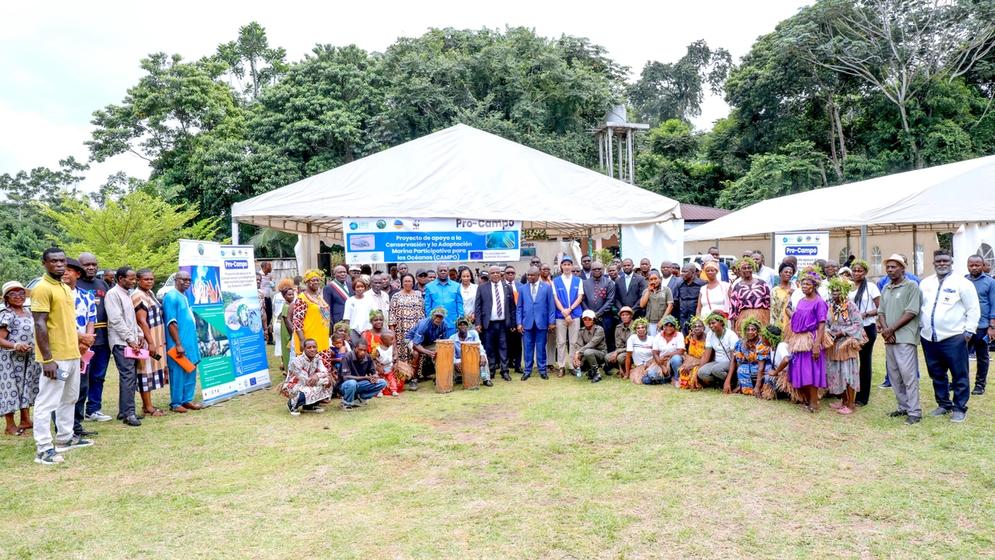
Dr. Aristide Takoukam Kamla
June 30
In early June 2026, I had the privilege of standing on the shores of Río Campo, where the waters of Cameroon and Equatorial Guinea meet. Looking across that shared seascape, I was reminded of a simple truth: marine species do not recognise borders, and neither should our commitment to protecting them.
It was there that we officially launched the Pro-CAMPO Project (Participatory Marine Conservation and Adaptation for Oceans)—a four-year initiative funded by the European Union and implemented by the African Marine Conservation Organisation (AMCO), the World Wide Fund for Nature (WWF), TUBE AWU, and Asociación Nacional para la Defensa y Gestión del Medio Ambiente (ANDEGE)
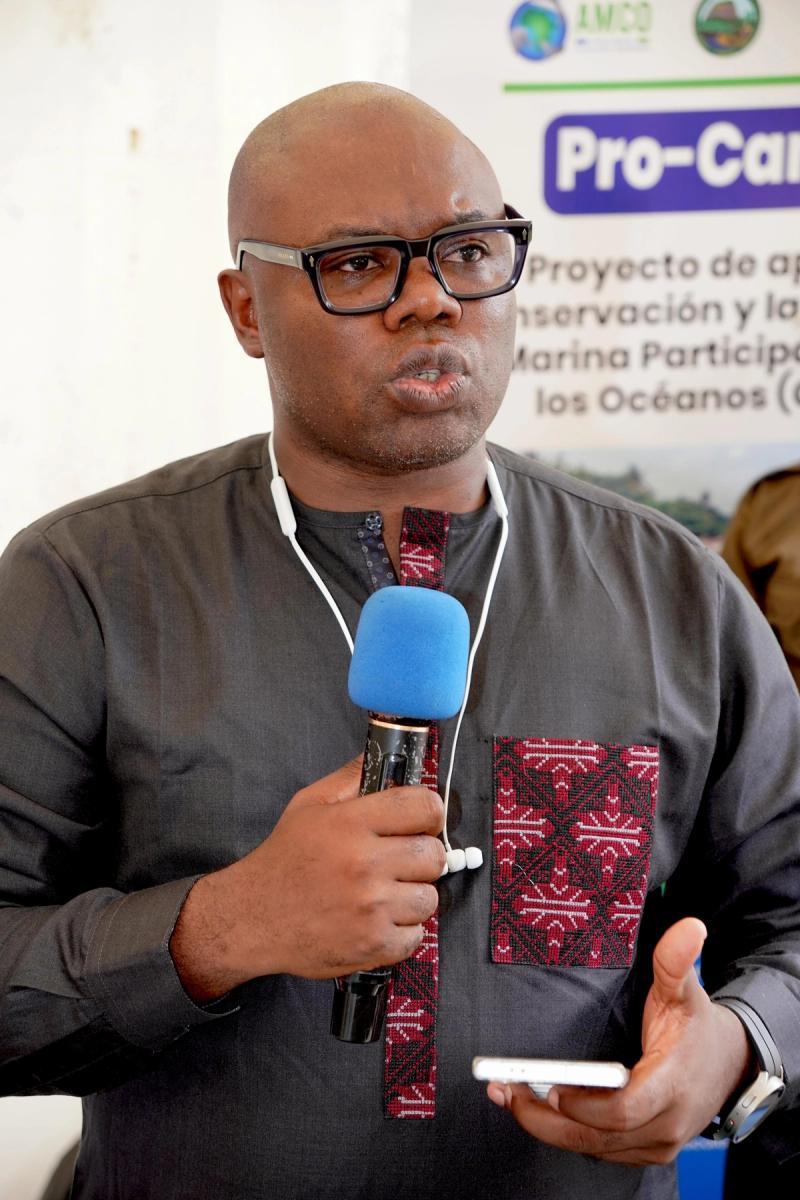
The project aims to establish the foundations for the long-term conservation of the natural capital and biodiversity of the Campo marine and coastal landscape shared by Cameroon and Equatorial Guinea. At the same time, it seeks to strengthen the resilience of local and indigenous communities while promoting the sustainable management of marine resources.
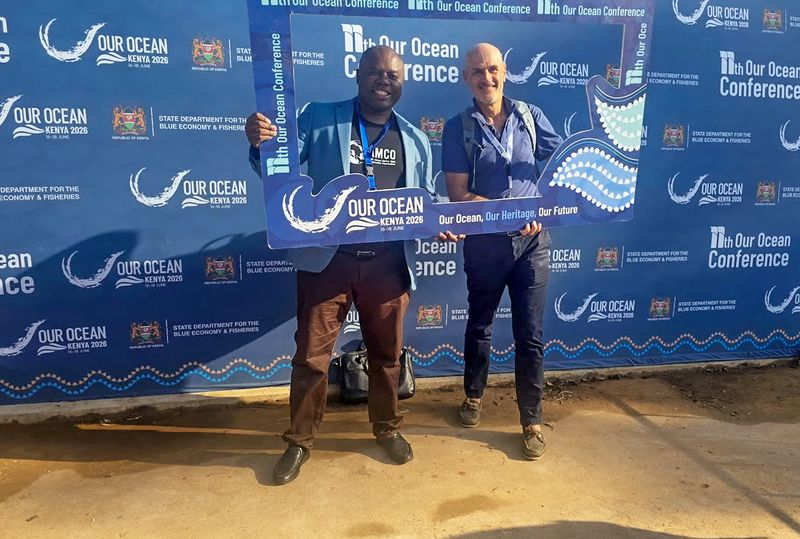
Just days later, I had the privilege of representing AMCO at the Our Ocean Conference in Mombasa, Kenya. We joined global leaders, policymakers, researchers, and conservation organisations to explore practical solutions for advancing the implementation of the Biodiversity Beyond National Jurisdiction (BBNJ) Agreement, strengthening efforts to combat illegal, unreported and unregulated (IUU) fishing, and accelerating progress toward the global 30x30 target to protect at least 30 per cent of the world's land and oceans by 2030. Bringing the experiences from Campo to one of the world's leading ocean forums was a reminder that the challenges facing our ocean and their solutions extend far beyond national boundaries. Whether on the shores of Campo or at a global conference, the message remains the same: the marine species we are working to protect move freely across borders. Our conservation efforts must do the same.
The Campo transboundary seascape is one of Central Africa's most valuable marine ecosystems. It is home to endangered sea turtles, whales, dolphins, sharks, rays, mangroves, and countless other species. Beyond its ecological significance, it supports thousands of people whose livelihoods depend on healthy oceans and productive coastal ecosystems.
Yet this extraordinary landscape faces increasing pressure from illegal, unreported and unregulated fishing, habitat degradation, pollution, unsustainable coastal development, and the growing impacts of climate change. These are challenges that no single institution, or even one country, can solve alone.
That is precisely why Pro-CAMPO was designed as a truly collaborative initiative. Over the next four years, we will work hand in hand with governments, local and indigenous communities, researchers, civil society organisations, and the private sector to strengthen marine protected areas, improve transboundary governance, promote sustainable livelihoods, and build resilience to climate change.
What gave me the greatest hope during the launch events in both Cameroon and Equatorial Guinea was the shared commitment demonstrated by everyone involved. Government authorities, conservation practitioners, community leaders, traditional authorities, development partners, and local communities all embraced a common vision: protecting our shared marine heritage while improving the lives of the people who depend on it.
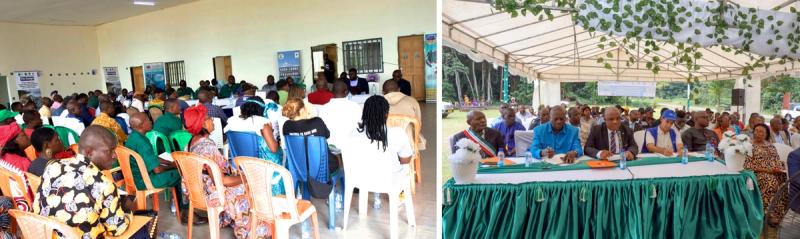
The momentum continued at the Our Ocean Conference, where discussions reinforced the urgent need for bold partnerships, innovative financing, and locally driven solutions to global ocean challenges. It was encouraging to see that the work we are beginning in Campo reflects many of the priorities shaping the global ocean agenda.
At AMCO, we believe that conservation is ultimately about people as much as it is about nature. When science informs decision-making, communities are empowered, and countries work together across borders, lasting conservation becomes possible.
I extend my sincere appreciation to the European Union for its confidence and support, to our consortium partners: WWF, TUBE AWU, and ANDEGE for their collaboration, and to the governments and people of Cameroon and Equatorial Guinea for embracing this shared vision.
This is only the beginning.
Together, we have an opportunity to demonstrate that protecting shared oceans requires shared responsibility and that transboundary cooperation is one of the most powerful tools we have to secure a sustainable future for both people and nature.