

Reversing the Trend of Deforestation around Cameroon’s Largest Freshwater Lake
Enanga Prucillia
November 27
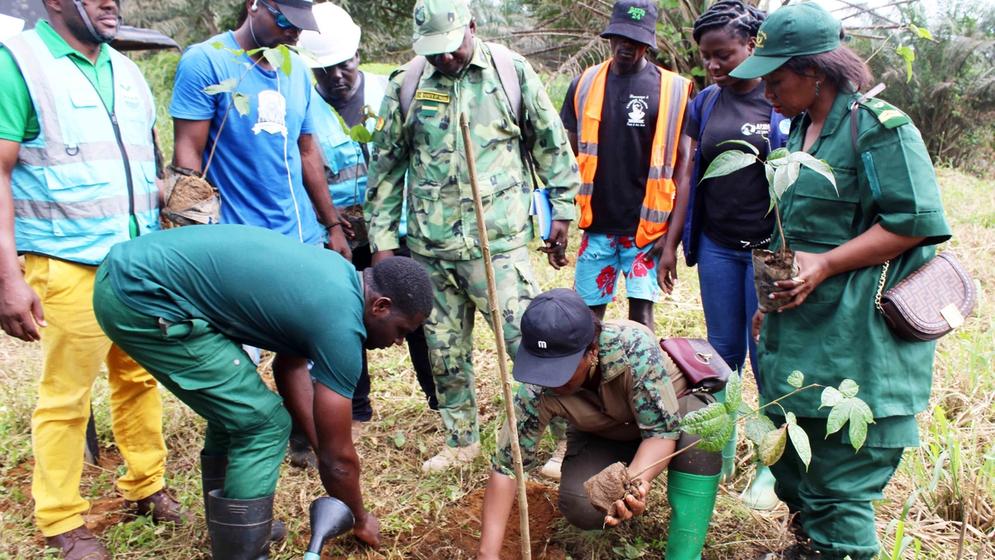
A reforestation campaign was carried out on 22 October 2025 to restore degraded areas within the Lake Ossa Wildlife Reserve in Dizangué, Cameroon. The initiative aimed to rehabilitate forest ecosystems severely affected by agriculture and deforestation,
By the end of the campaign, 500 trees had been planted across an estimated two hectares. This marked an important step toward restoring degraded habitats around Lake Ossa while strengthening local awareness of conservation issues.
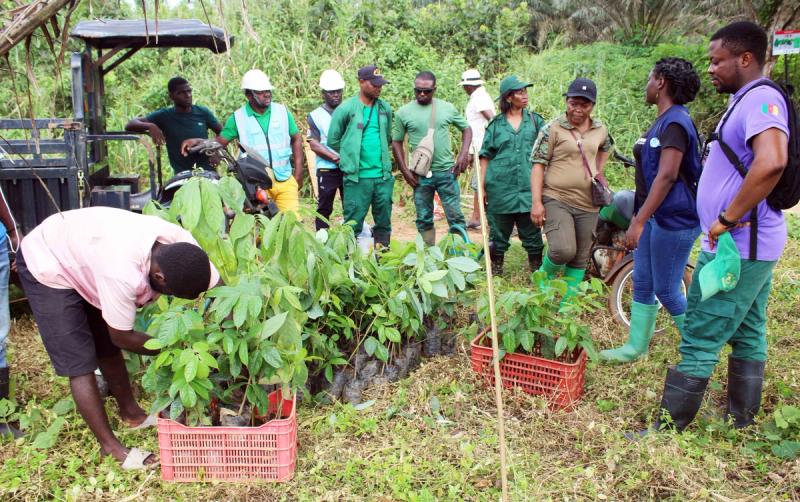
Delivering fresh seedlings to the planting site.
“This campaign will contribute to the restoration of both aquatic and terrestrial habitats,” explained Annick Zanga, AMCO Site Coordinator.
The project set out to restore forest ecosystems within the Lake Ossa Wildlife Reserve and its watershed, map deforested areas to assess forest loss, carry out tree planting using nursery-grown species, and engage local communities to support long-term conservation efforts.
Three heavily deforested sites were identified within the reserve and surrounding watershed, including one opposite the SAFACAM agro-plantation factory and another at the KM3 junction. These areas had been cleared by local farmers, often using fire to prepare the land. This practice left the soil exposed, increasing erosion and causing sediments to wash into the lake.
“The rehabilitation of forest ecosystems will not only restore ecological balance, but also improve local livelihoods,” Annick added.
With funding from the Dizangué Council and support from the Ministry of Environment, Nature Protection and Sustainable Development (MINEPDED), a nursery of more than 1,000 seedlings was established. Species grown include pachyloba, bamboo, safou, wild mango, teak, and cashew, ensuring a steady supply of seedlings for future replanting efforts.
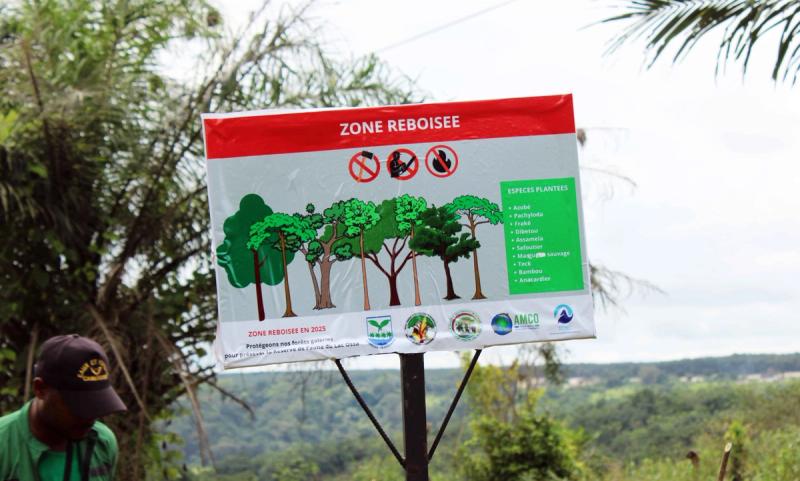
Signposts were installed to guide the public and protect the newly planted area from encroachment.
Long-term plans include monitoring tree survival, preventing vandalism, replanting where necessary, and maintaining strong community involvement to secure the sustainability of restored areas.
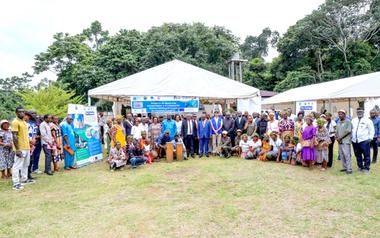
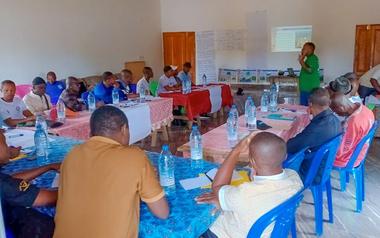
To reinforce local participation, an awareness campaign was held on 10 November 2025 with residents of Dizangué. Community members were sensitised to the impacts of deforestation and how forest loss can directly affect their livelihoods.
“Local communities are at the heart of this initiative,” said Nkwemi Laurelle, AMCO Technical Field Assistant. “They play a key role in ensuring the long-term success of this project.”
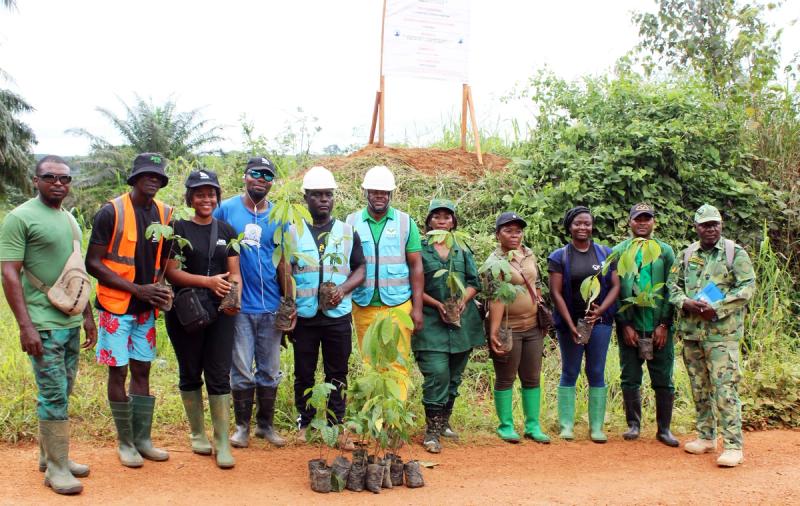
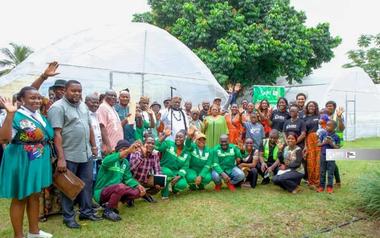
Group photo of stakeholders during tree planting
The Lake Ossa Wildlife Reserve, Cameroon’s largest inland lake system, is made up of three main lakes—Mwembé, Grand Lac, and Mévia. It supports rich biodiversity, including the endangered African manatee, and holds strong potential for ecotourism. However, increasing pressure from agricultural expansion and deforestation has disrupted its ecological balance.
This reforestation effort builds on earlier work that began in 2024, when 4,500 trees were planted with funding support from the SeaWorld Conservation Fund and the Whitley Fund for Nature, reinforcing long-term commitments to restoring and protecting the Lake Ossa landscape.